01 · RESEARCH
Current
STAR
Systematic Toolchain for AI Research
Runs one research project from idea through reproducible experiments to paper-ready evidence.
STAR takes the STAGE to tell a STORY
A reusable foundation for reproducible, well-structured AI research: one predictable layout, one experiment entrypoint, and a fifteen-skill workflow that carries a vague idea all the way to a released repository, with every decision on file. When the results are ready to write up, STAGE picks them up as fingerprinted evidence and writes the paper on top.
The STAR family
Each works independently. Connect them when you want upstream work to flow downstream as fingerprinted, read-only evidence.
Systematic Toolchain for AI Research
Runs one research project from idea through reproducible experiments to paper-ready evidence.
Systematic Toolchain for Authoring, Guiding, and Editing
Turns one contribution into a traceable paper, review cycle, and submission package.
Systematic Toolchain for Organizing Research over Years
Shapes graduate research into a defensible master's thesis or doctoral dissertation, defense, and deposit.
Why STAR
Research code rots when structure lives in someone's head and context lives in a chat window. STAR moves both into the repository itself.
Code, data, weights, outputs, and methodology notes each have one predictable home: ${CODE_NAME}/, datas/, inits/, wkdrs/, metds/.
Machine-specific paths live in a local .env, never in scripts. Clone the repo anywhere, point it at your conda or venv, and run.
bash execs/run.sh <exp> activates the environment, exports the path variables, and launches any experiment script the same way, every time.
Plans live in metds/plans/, execution intermediates in tasks/, run artifacts in wkdrs/. Key decisions, task dependencies, and validation records persist in project files (not in chat history), so any session, human or agent, can pick up exactly where the last one stopped. What a session learns that no plan or report owns (an environment quirk, a standing preference, a dead end) is recorded in .star/memory/, and a session hook puts it in front of the next agent.
Shared instructions and identical skill sets ship for Codex, Claude, Kimi, Cursor, DSH, Pi, and Qwen Code, and every run replies and writes its documents in English or Chinese. Your agents follow the same conventions you do, and two dials in .env set the terms: INVOLVE decides how much a run asks you before it decides, STAR_LANG which language it writes. STAR stays framework-agnostic underneath: bring your own model stack, dependency manager, and experiment tracker.
Local data, model weights, generated outputs, and environment settings are excluded from version control out of the box. Adopt an existing project with symlinks; nothing gets moved, nothing gets overwritten. A commit guard declines what is expensive to undo: blanket staging, history rewrites, and any commit that would put a checkpoint into your history.
bash execs/update.sh syncs newer STAR skills and workflow guides into an existing project without touching your code, experiments, or Git remotes.
Project structure
The abbreviated names are deliberate: short to type, unambiguous to search, and identical across every STAR project.
datas/Data: raw, processed, or generated datasetsinits/Initializations: pretrained weights and checkpointsmetds/Methodologies: plans, design notes, research recordsexecs/Executions: launchers and experiment scriptsscpts/Scripts: individual runnable experiment definitionstasks/Tasks: each plan's tool scripts and working fileswkdrs/Work directories: logs, metrics, predictions, artifactsResearch workflow
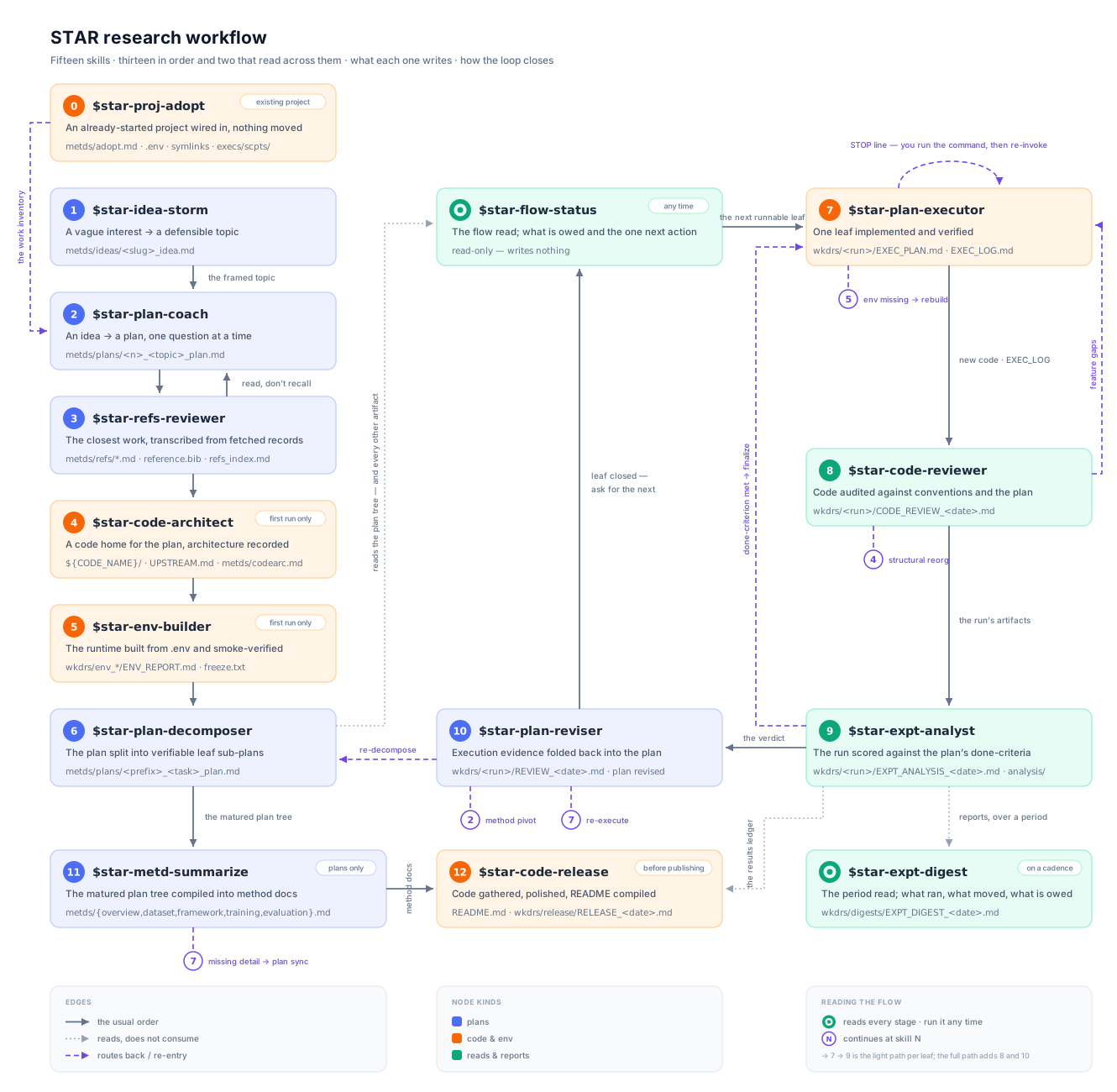
Each skill writes its evidence into project files, so the whole research programme is auditable and resumable at any point.
$star-proj-adoptAdopt an already-started project without disturbing it: survey, symlink, record.
$star-idea-stormConverge a vague interest into a defensible research topic, scored on six dimensions.
$star-plan-coachClarify the idea through staged questions into a strategic research plan.
$star-refs-reviewerSurvey related work into analysis notes and a verified, classified bibliography.
$star-code-architectSet up the codebase from a scored reference implementation, or survey and reorganize the code already there, and record the architecture.
$star-env-builderBuild the conda env or venv from .env, resolve dependencies, verify it runs.
$star-plan-decomposerSplit strategic plans recursively into verifiable, executable sub-plans.
$star-plan-executorImplement and lightly validate one executable leaf plan, logging every run.
$star-code-reviewerReview code against project conventions and the plan's promised implementation, then, when asked to fix, apply mechanical behavior-preserving fixes.
$star-expt-analystAudit a run against what the plan expected: artifacts, logs, metrics, meaning.
$star-plan-reviserRevise a plan in place against its execution evidence, with a revision history.
$star-expt-digestSummarize what the programme has done lately: verdicts, movement, gaps.
$star-flow-statusReport progress across the whole flow and the single next action to take.
$star-metd-summarizeCompile the plan tree into paper-ready method documents, flagging the unverified.
$star-code-releasePrepare the repository for release: promote code, polish, compile the README, sweep for secrets.
Quick start
Start fresh from the template, or run update.sh --adopt
inside an existing repository and STAR installs itself around your work without moving a single file.
Ready when you are
STAR is free, MIT-licensed, and framework-agnostic. Use it as a GitHub template, or adopt it into the project you already have.